


- Home
- Our Team
- Services
- Healthcare Legal Services
- Accountable Care Organizations and Other Providers of Health Services
- Telehealth and Virtual Care
- Digital Health Platforms and Tools
- Clinical Supervision and Management
- Medical Technology and Devices
- Wellness and Health Improvement Programs
- Licensing and Credentialing
- AI in Healthcare
- HIPAA Compliance
- Regulatory Requirements for Health Plans
- Healthcare Advisory Services
- Business and Corporate Law
- General Counsel Services
- Employment Law
- Immigration and Employer Sponsorship
- Healthcare Legal Services
- Media
- Blog
- Contact
New York City HIPAA Compliance Attorneys
Attorneys Helping Healthcare Businesses Throughout the U.S. Protect Sensitive Patient Data
Healthcare businesses are subject to regulations that are meant to ensure that they will provide quality care while protecting patients against potential harm. These regulations include requirements under the Health Insurance Portability and Accountability Act (HIPAA) to protect patient health information. Businesses must implement the proper safeguards to prevent the unauthorized access, use, or disclosure of sensitive patient data.
When HIPAA violations occur, healthcare businesses may face multiple types of penalties. Fines may be imposed that could result in significant financial losses. A business could lose important licenses, which could prevent it from operating. It may also be held liable for harm caused to patients or other parties due to data breaches or other unauthorized disclosures of protected information. All of these issues could affect a healthcare business's ongoing success, or they may even result in the shutdown of the business.
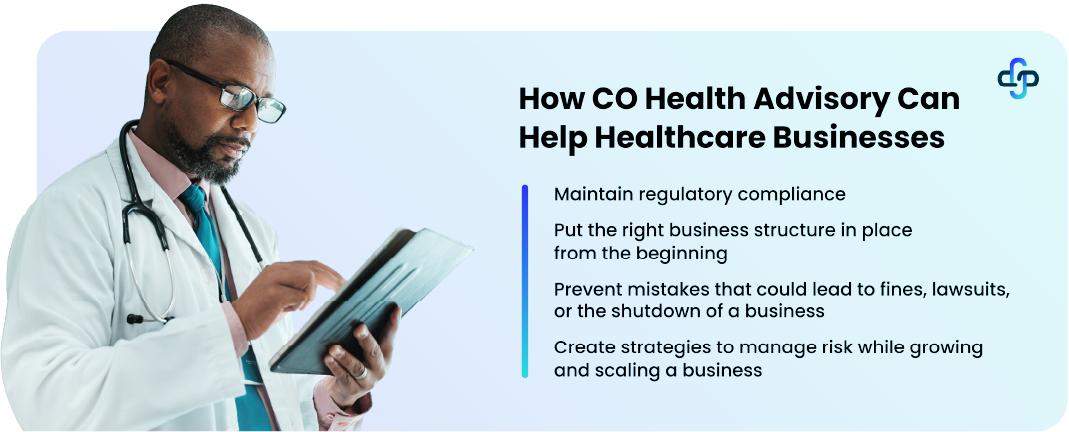
The team at CO Health Advisory provides legal counsel for healthcare organizations, ensuring that they can address concerns related to HIPAA compliance. Our attorneys understand the regulations that address privacy and security, and we can help prevent costly mistakes while making sure our clients can continue to protect sensitive information as they grow and scale their operations.
To make sure your business is compliant with HIPAA and other laws that address data security and patient privacy, contact our firm and schedule a strategy call.
Understanding HIPAA Requirements
HIPAA applies to healthcare providers who collect and store health information or other organizations that maintain patient records. Healthcare providers that are subject to HIPAA include hospitals, medical practices, nursing homes, pharmacies, and other businesses that provide medical services.
Business associates that work with healthcare organizations must also comply with certain HIPAA requirements. Common business associates include billing companies, practice management vendors, electronic health record system providers, cloud storage services, and consultants who access patient information.
Protected health information includes health information for patients that is transmitted or maintained in any form, including electronic or paper records. The information may be related to past, present, or future physical or mental conditions, the forms of treatment that have been provided, or payment for services. Examples of protected health information include medical records, billing information, health insurance data, and laboratory results.
HIPAA Privacy Rule Requirements
HIPAA has established standards for protecting the privacy of patients' health information. The law addresses how businesses may use and disclose health information, and it requires organizations to use the proper privacy safeguards.
Entities are generally allowed to use protected health information for treatment, payment, and healthcare operations. Treatment includes providing, coordinating, or managing healthcare and related services. Payment involves activities related to obtaining reimbursement for healthcare services. Healthcare operations include quality assessment, case management, business planning, and other administrative functions.
Uses and disclosures of patient data that fall outside of the areas described above will generally require patient authorization unless specific exceptions apply. Organizations will need to understand which exceptions may apply to their situations, and they must ensure that disclosures are handled correctly.
Healthcare businesses are also required to provide patients with notices of their privacy practices. These notices should explain how information may be used and disclosed, patients' rights, and the legal duties that apply to the organization. Patients have the right to access their medical records, request amendments to inaccurate information, be notified of certain disclosures, and request restrictions on the use and disclosure of their information. Healthcare organizations must establish procedures for responding to these requests within the required timeframes.
Our attorneys help healthcare businesses develop policies and procedures that comply with HIPAA requirements. We make sure our clients understand the permitted uses and disclosures of patient data, and we work with them to draft notices of their privacy practices and establish processes for responding to patient requests.
HIPAA Security Rule Safeguards
HIPAA establishes standards for protecting electronic health information. Healthcare organizations and business associates are required to use the proper safeguards to ensure that data is kept confidential.
The administrative safeguards required include security procedures, controls to limit access to information, and training for employees. Organizations should conduct risk assessments to identify potential threats and vulnerabilities. Based on the identified risks, they will need to implement security measures to reduce the risks of unauthorized access or disclosure of patient data.
Physical safeguards may address access to facilities and security measures for workstations or other devices. Organizations should take steps to limit physical access to electronic information systems and facilities. They should also implement policies that will prevent unauthorized viewing of screens or access to unattended workstations.
Technical safeguards include access controls such as user identification and encryption to prevent unauthorized access to electronic health information. Audit controls may include logging and monitoring of system activity to detect security incidents. Transmission security measures should also be used to protect information that is transmitted through electronic networks.
Our lawyers can advise healthcare organizations on the steps that should be taken to maintain proper security. We can help clients conduct risk assessments, identify appropriate safeguards, develop security policies, and put the proper controls in place.
Business Associate Agreements
When healthcare organizations work with business associates who may have access to protected health information, they will need to use business associate agreements before disclosing information. These agreements must specify the permitted uses and disclosures of protected health information and require business associates to implement the appropriate safeguards. Business associates will also be required to report security incidents and breaches, ensure that subcontractors who access protected health information agree to the same restrictions, and return or destroy protected health information when contracts terminate.
Healthcare businesses are responsible for ensuring that business associates comply with the applicable HIPAA requirements. Organizations should conduct due diligence before entering into relationships with business associates, evaluating their security capabilities and compliance programs. Ongoing monitoring through audits or security assessments can identify potential concerns.
Our attorneys work with clients to address issues related to business associate relationships. We can draft business associate agreements that comply with HIPAA requirements and provide guidance on due diligence and monitoring practices.
Breach Notification Obligations
HIPAA requires healthcare organizations and business associates to provide notifications when data breaches result in the unauthorized disclosure of protected health information. When breaches affecting 500 or more people occur, organizations must notify the affected people no later than 60 days after the discovery of the breach. A notification must include a description of the breach, the types of information involved, and the steps people should take to protect themselves. An organization should also explain what is being done to investigate and mitigate harm.
Our lawyers can help companies respond to security incidents and data breaches. We work with clients to conduct breach risk assessments, prepare notifications, and take corrective measures. We can provide guidance throughout the incident response process, helping to minimize harm while ensuring that our clients meet their legal obligations.
Policies, Procedures, and Training
HIPAA requires healthcare businesses to develop written policies and procedures regarding privacy and security. These documents should detail how the required standards are being met while providing guidance to employees on the proper procedures. Policies should be reviewed and updated regularly to address regulatory changes, new technologies, or potential risks.
Organizations must also maintain records related to privacy and security, including risk assessments, records of employee training, breach investigations, and responses to patient requests. These records can provide evidence that a business has complied with its legal requirements.
Employee training is a critical part of HIPAA compliance programs. All employees who will have access to protected health information must receive training on privacy and security policies and procedures. Training should occur for new employees, in response to changes to privacy or security practices, and periodically to ensure that employees are following the proper procedures. Regular training will help to maintain awareness of the proper methods of security and prevent potential breaches.
Our attorneys can help healthcare organizations develop comprehensive HIPAA compliance programs, including policies, procedures, training materials, and documentation.
Contact Our New York City HIPAA Compliance Attorneys
Healthcare organizations may need to deal with a wide variety of complex challenges as they protect patient information and maintain HIPAA compliance. At CO Health Advisory, we can provide our clients with the guidance needed to address these challenges correctly. With our understanding of HIPAA requirements, we can help clients develop effective compliance programs and respond to potential threats. Contact our New York HIPAA regulations lawyers to discuss these issues in a consultation.
Clients We've Worked With

Ready to Get Started?
Contact us today
 The use of the Internet or this form for communication with the firm or any individual member of the firm does not establish an attorney-client relationship. Confidential or time-sensitive information should not be sent through this form.
I have read and understand the Disclaimer and Privacy Policy.

From our office in New York City, we provide representation for businesses in the surrounding area, including Manhattan, Brooklyn, Queens, The Bronx, Yonkers, Jersey City, Hoboken, and Newark. We also work with businesses throughout the United States, including in Boston, Philadelphia, Baltimore, Atlanta, Detroit, Chicago, Houston, Dallas, Denver, Phoenix, Seattle, San Francisco, and Los Angeles.
17 State Street, Fl 40, Suite 4000, New York, NY 10004
212-739-0611
Hours: Monday - Friday, 9am - 5pm EST